
Materials & Editions
Three editions and three surfaces. Which one you're looking at determines: how it's finished, whether it carries a number, and whether the picture can ever be made again.
At a glance
| Field | Collector | Expedition | |
|---|---|---|---|
| What it is | Signed print | Numbered edition of 25 | Numbered edition of 12 |
| Surfaces | Paper, Metal | Metal, Acrylic | Metal, Acrylic |
| Sizes | 12×18 – 24×36, plus panoramas | 16×24 – 40×60, plus panoramas | 24×36 and up |
| Triptych | No | Metal, Acrylic | Metal, Acrylic |
| Numbered | No | Yes | Yes |
| Seal | No | ArtTrust | ArtTrust |
| Retired | When I stop printing it | At the cap, for good | At the cap, for good |
| From | $175 | $700 | $2,325 |
Field Edition
Signed, not numbered, and printed for as long as I keep the image available. These are the images that open a door onto the rest of the work. Paper ships rolled or flat. Metal arrives ready to hang.
It's also where most collectors start. Living with a print for a year teaches you more about what belongs on that wall than any amount appreciating an image on the web does.
Collector Edition
The edition counts every size and surface together, not that many per size, and not that many per surface. Signed, numbered and registered. When the last one is placed the image is retired, and I won't reopen it in another size or on another surface.
Expedition Edition
Kept for pictures that can't be made again: polar water, deep backcountry, a moment that doesn't come around twice. The same rules as Collector, a harder cap, and nothing below 24 × 36. A picture that can't be repeated isn't sold small.
Artist's proofs are two per numbered image. They aren't a second edition.
The surfaces
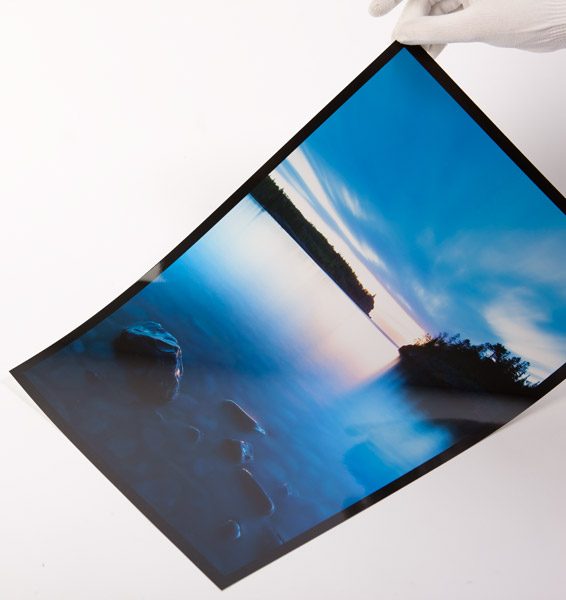
Paper
Fujiflex Crystal Archive, a high-gloss photographic paper with a warm base and a surface that still looks wet. Field Edition only. It ships rolled or flat with a framing note: behind UV glass, with a spacer, so the glazing never touches the print.
I don't sell frames. That's not a gap. The frame has to answer to your room.
- Editions
- Field only
- Ships
- Rolled or flat
- Care
- Your framer's glazing, never the print
- Formats
- Single panel
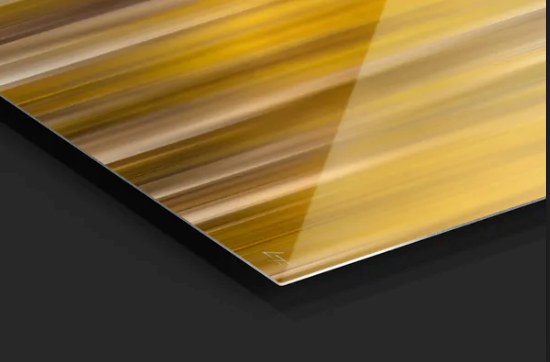
Metal
The image is infused into coated aluminum. The dyes go into the coating rather than sitting on top of it, so there's nothing on the surface to scratch off. Waterproof, rigid, and hung on a recessed mount that holds it just clear of the wall.
It's the only surface that runs through all three editions. The largest Field print and the standard Collector object are the same material.
- Editions
- All three
- Hangs
- Recessed mount, ready to hang
- Care
- Dry or damp microfiber. Waterproof.
- Formats
- Single or triptych
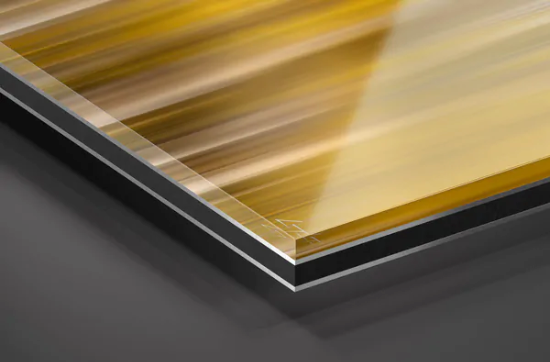
Acrylic
The print is face-mounted behind acrylic and float-mounted off the wall. You're looking through the acrylic at the picture, and that depth is the whole point. It gives the blacks somewhere to go, and it throws a shadow, so the piece reads as an object rather than as a picture fixed to plaster.
Collector and Expedition only. Acrylic is a large part of what makes those pieces objects rather than prints, which is why there's no Field acrylic.
- Editions
- Collector, Expedition
- Hangs
- Float mount, stands off the wall
- Care
- Dry microfiber. Never ammonia.
- Formats
- Single or triptych
The ladder
Every number below is read from the same table the shop charges from, so a price here can never be stale.
| Size | Paper | Metal | Acrylic |
|---|---|---|---|
| Field EditionSigned, not numbered | |||
| 12×18 | $175 | $350 | · |
| 16×24 | $250 | $425 | · |
| 20×30 | $325 | $575 | · |
| 24×36 | · | $800 | · |
| 12×24 | $225 | $375 | · |
| 12×36 | $275 | $475 | · |
| 20×40 | · | $750 | · |
| Collector EditionEdition of 25 | |||
| 16×24 | · | $700 | · |
| 20×30 | · | $1,050 | · |
| 24×36 | · | $1,450 | $2,025 |
| 30×45 | · | $2,175 | $3,050 |
| 40×60 | · | $3,650 | $5,100 |
| 12×36 | · | $775 | · |
| 16×48 | · | $1,300 | · |
| 20×40 | · | $1,350 | · |
| 20×60 | · | $1,950 | $2,725 |
| 24×72 | · | $2,800 | $3,900 |
| 30×60 | · | $2,825 | $3,950 |
| 30×90 | · | $3,450 | $4,850 |
| Expedition EditionEdition of 12 | |||
| 24×36 | · | $2,325 | $3,250 |
| 30×45 | · | $3,475 | $4,875 |
| 40×60 | · | $5,825 | $8,175 |
| 20×60 | · | $3,125 | $4,375 |
| 24×72 | · | $4,450 | $6,175 |
| 30×60 | · | $4,500 | $6,300 |
| 30×90 | · | $6,575 | $9,175 |
| 40×80 | · | $7,650 | $10,675 |
- No Field acrylic. Acrylic is a large part of what makes a numbered piece an object. Offering it unnumbered would spend the difference.
- No Collector or Expedition paper. Those arrive finished. Paper's for a framer.
- No 16 × 24 acrylic. Acrylic starts at 24 × 36, because that's the size where the depth and the float begin doing the thing you're paying for. Below it you're buying the idea of an acrylic rather than the effect.
- Over sixty inches. I can make any photograph larger than sixty inches. On some, I list a larger size and you buy it the same way as any other. Shipping within the contiguous US is included. For the rest, it is Inquire. Write to me.
- Paper stops at 12 × 36. Anything larger arrives finished, on metal or acrylic. Paper is for a framer, and a very large sheet of it is a framing problem rather than a print.
- Triptych Triptych sizes are set per image and priced on their own rows. Which sizes a picture is offered in depends on where it can be cut, so they're on the picture page rather than here.
Size
Nothing on a screen tells you how big a print is. This is the part people get wrong, and it costs them. Almost everyone buys one size down from what the wall wanted.
Drawn to scale against a six-foot figure, each hung with its center at sixty inches, gallery standard, and the height a print looks right at in a house.
Measure the wall. A print wants roughly two thirds of the width of the wall, or of the furniture beneath it. Above a standard sofa that's a sixty-inch piece, not a thirty-six.
Then tape it out. Painter's tape on the wall at the size you're considering, left there a day. Five minutes, and it's the difference between the right print and the one you settle for.
As a triptych. A triptych is one photograph split across three panels that hang side by side with a gap between them. It isn't three pictures. The composition runs straight through the gaps, which is why only some images are offered this way, and why the sizes are different for every one of them.
The size names the picture, not the panel. A 60 × 90 triptych is three panels, each 60 × 30, and the picture is ninety inches across. Then add the gaps: at two inches you're hanging ninety-four inches of wall, not ninety. Measure for the run, not for the size on the button.
The gaps are yours. An inch and a half to two inches is what I'd use. Wider and it starts reading as three pictures. Tighter and you lose the reason to split it at all.
Tape out all three panels with the gaps in them and leave it up for a day, the same as any other size. Then mark the wall before you drill. Each panel hangs on its own mount, so each one has to sit level by itself and level with the other two. Take your time on the first one. The other two hang off it.
Every picture page also has a wall preview.
Signed, numbered, sealed
How a piece is signed depends on what it's made of.
Paper. Fujiflex prints carry a black border, and I sign every one by hand, in silver, on the border, with the title in the lower left. A real signature, on the front, in the place prints have carried one for two hundred years.
Metal and acrylic. The signature and the edition number sit on the face of the piece, put there in production rather than added to a finished surface afterwards. On metal they go into the coating; on acrylic they sit behind the acrylic. Either way there's nothing on top of the panel to scuff, lift or polish away, and nothing that could be taken off one piece and put on another.
Every Collector and Expedition piece also carries an ArtTrust bubble seal on the reverse, with a matching seal on the certificate. The bubble pattern forms at random inside the seal and can't be reproduced, not by me either. Anyone can check a piece against the ArtTrust register.
A triptych. A triptych is one piece, and it's marked once. It takes a single number out of the edition, and the signature, the number and the seal all sit on the right-hand panel: signature and number on the face, the ArtTrust seal on the reverse. One certificate covers the set, and it names the size of the whole picture. The left and center panels carry no marks at all, so the set can't be broken up and sold as three signed pieces.
The certificate carries the title, the location, the year the picture was made, the edition number, the size, the surface, and my signature in ink. I sign it, build the packet and mail it myself. It comes separately from the piece, and it comes from my hands rather than from a production line. Field Edition is signed and carries no seal, because there's no number to protect.
The print may ship from the lab. The certificate comes from me.
And the certificate is a copy of the record, not the record itself. I keep the studio copy and the ledger: every number in every edition, and where it went. If a certificate is lost or damaged I reissue it against that ledger, and the reissue keeps the original number; voiding a certificate never burns one.
Living with it
No glass to break, and none to clean.
Metal. A dry microfiber cloth, or a damp one. It's waterproof.
Acrylic. A dry microfiber cloth, and nothing with ammonia in it, which means no household glass cleaner. Ammonia crazes acrylic and the damage doesn't come out. A plastic-safe cleaner if a cloth isn't enough.
Paper. Leave it to your framer, then clean the glazing and never the print.
A triptych. Check that it's still level the first time you dust it. One panel drifting a quarter inch is invisible on its own and obvious across nine feet of wall.
Metal is the most stable thing I make. It holds its color on an open wall, with nothing over it, longer than a traditional photographic print does behind UV glass. Acrylic adds a UV-filtering sheet on top of that. Paper's the one that needs the help, which is why the framing note asks for UV glass and a spacer.
None of it survives direct sun. Keep a piece out of the hours when the sun lands on it and it'll outlast the wall.
How it reaches you
I make each print when you order it, and nothing sits in a warehouse. I ship each order within four weeks, and it is typically much sooner. Pieces over sixty inches on the long side, allow about six weeks.
I include shipping within the contiguous US, the lower 48 states plus DC, on every print, including a piece over sixty inches on the long side. I quote shipping for Alaska, Hawaii, US territories, APO and FPO addresses, and every international order.
Metal and acrylic ship in a reinforced carton. Paper may be shipped rolled or flat depending on size.
I ship triptychs free within the contiguous US, the same as every other piece. The three panels travel together, carefully packed.
Every piece ships fully insured. If the carton is obviously damaged when it arrives, refuse the delivery. That's the cleanest outcome for both of us. If the damage only shows once it's open, photograph the carton and the piece before you throw any of the packing away, and send me the pictures. A replacement goes into production the same day and ships at no cost to you.
If one panel of a triptych arrives damaged, I'll replace that panel and not the set, and it keeps its number.
Carriers give me forty-eight hours from delivery to report it, so open it when it lands rather than leaving it against a wall for a couple of weeks.
Commissions and unusual sizes
If a wall needs a length I haven't listed, ask. I won't use a custom size to extend a closed edition. That goes for triptychs too. If an image isn't offered as one and you think that wall wants it, ask. I'll tell you honestly whether the picture survives the cut.