Field NotePolar
South Georgia
November 1, 2026
My main reason for going to South Georgia was king penguins. I got them, and so much more. There were gentoos everywhere, a smaller number of macaronis and chinstraps, elephant seals, fur seals, leopard seals, and a lot of noise and smell I hadn't even considered.
Every landing started in a zodiac. We'd run in close, if conditions were good enough to land at all, then climb out and wade ashore in muck boots. More than once the conditions deteriorated and we weren't able to go ashore or even launch the zodiacs. The beaches are covered in guano. A lot of it is pink from the krill, and the penguins stand in it, sleep in it, and add to it constantly. They're filthy birds, and the smell competes with the sound.
Then you hear it. Gentoos bray like donkeys, nonstop. Kings trumpet. Elephant seals make a low, guttural sound like a dying engine trying to crank. Add a few thousand of each and it never really goes quiet.
Salisbury Plain is where it really hit me. The king colony there runs across the plain and up into the hills, tens of thousands of birds. At first it just looks like a dark patch on the land. Then you start picking out individual birds, the bright orange-yellow at their necks and the chicks in brown fuzz, and it doesn't end. We walked among the colony for a while, then climbed a small ridgeline for a better view down on the beach. From up there, you had a completely different perspective of scale.
You're supposed to give penguins space, so I always moved. But they don't always cooperate. Most of them stay on their penguin paths and march in straight lines, sometimes in long parades. Then one waddles over to see what you're doing, or walks right at you until you step aside. On land they're clumsy. They misjudge jumps, scramble up rocks with their claws and beaks, and slide down snow on their bellies. In the water they're completely different. They're fast, they porpoise through the swell, and they look like fighter jets.
They have a good reason to hurry. Leopard seals wait in the shallows, so every landing is frantic as the penguins rush to get out of the water. One day from the zodiac we watched a leopard seal catch a penguin. It played with it like a cat for about half an hour, coming up near the boats as if it wanted to show us.
The elephant seals were the other big presence on the beaches. The beachmasters, the dominant males, can weigh around four tons and are about the size of a small school bus. You give them a wide berth. They move faster than you'd expect for something that size. A sleeping bull will open one eye to check what you're doing, and if he decides you're too close to his beach or his harem, it gets very loud, very fast. When two of them fight, it sounds like a stadium after a bad call. The females are much smaller, but they still flop onto their pups, which squawk until they're freed.
Not everything on those beaches was healthy. Giant petrels and skuas work the wounded animals, and they don't wait for them to die. The slow elephant seals took the worst of it. I'd seen the same thing in Patagonia with kelp gulls on the backs of right whales. It's hard to watch. They're like oversized mosquitoes. But it's part of the place.
Behind the beaches is tussac grass, five or six feet tall, growing in big clumps with animal paths running through them. That's where the fur seals are. They're territorial, they're fast, and they'll come at you if you get too close. More than once I found one on the path ahead of me and had to backtrack through the grass. A bite is a serious problem out there. They get infected easily, and South Georgia is too far out for a helicopter evacuation, so a bad bite could send the whole ship back.
The part I didn't expect to love was getting up high. Our guide was Tashi Tenzing, the grandson of Tenzing Norgay, who made the first ascent of Everest with Edmund Hillary. Tashi has climbed Everest himself, and he's a great guy, with some great stories. He led a few of us on small climbs: Edda Hill above Godthul, part of Shackleton's route from Fortuna Bay, and the overlook above Salisbury Plain.
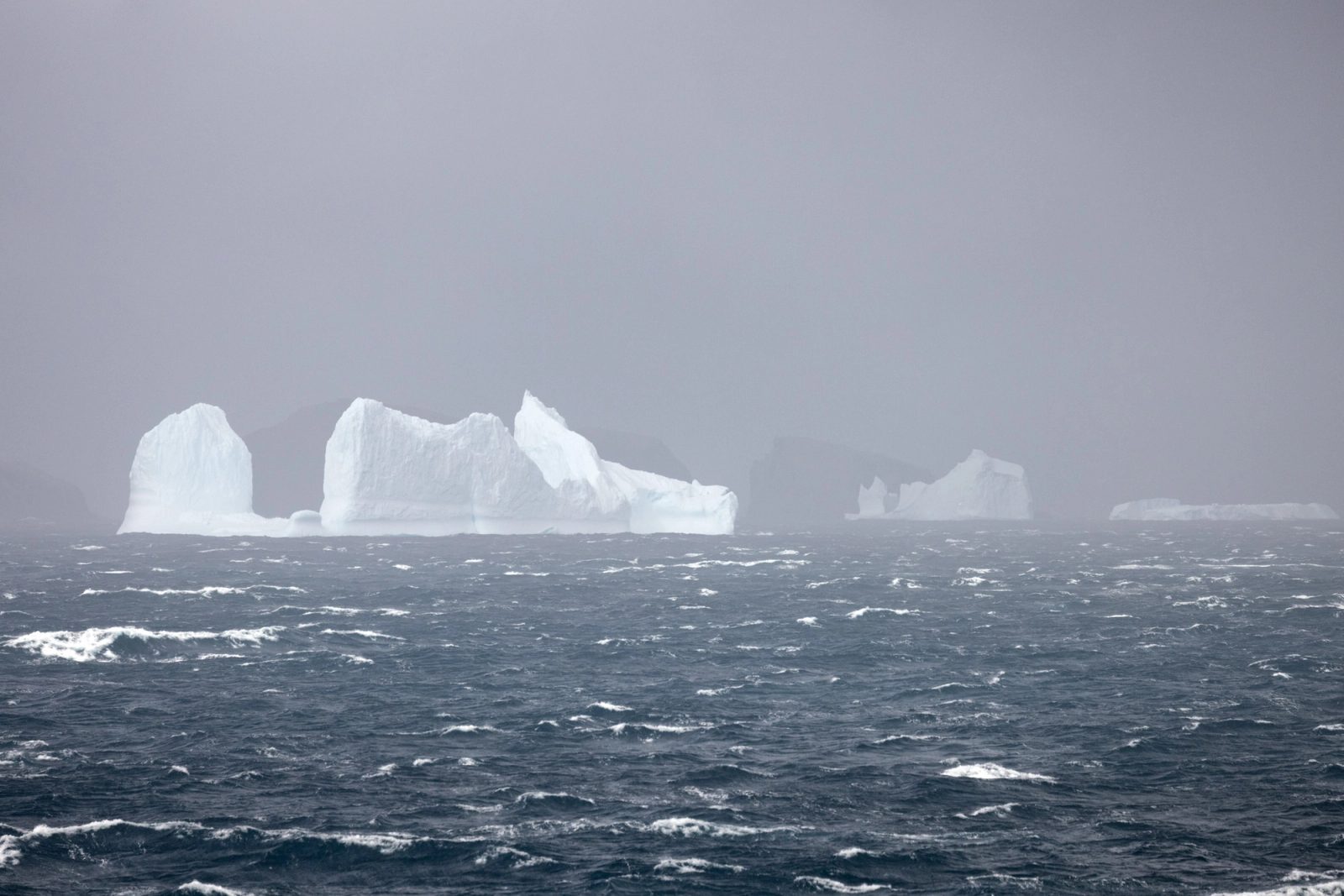
The best was Cooper Bay. We climbed through tussac grass past fur seals, above a small macaroni colony and then a bigger gentoo colony higher up the slope, to the summit. At the top you could see all of it: Cooper Island offshore, icebergs scattered out to the horizon, the gentoos on the hillside below, and the ship sitting tiny in the bay.
We spent six days making landings. South Georgia was the highlight of the trip. Mountains always pull at me, and the king penguins I came for were everywhere. I'd never been anywhere like it, with that much ocean, that many mountains, and that much life all in one place. Then we left for the Antarctic Peninsula, which is a different story.
The print that belongs with this note
Attack Formation — Field Edition